Publication.
MAY 2018, CYPRUS
Topophilia
How do we perceive the world? How do we experience the environment? Is it the result of a cognitive procedure? Does our experience rely more on a direct perception?
Finally, how do we construct our vision of place, our vision of space?
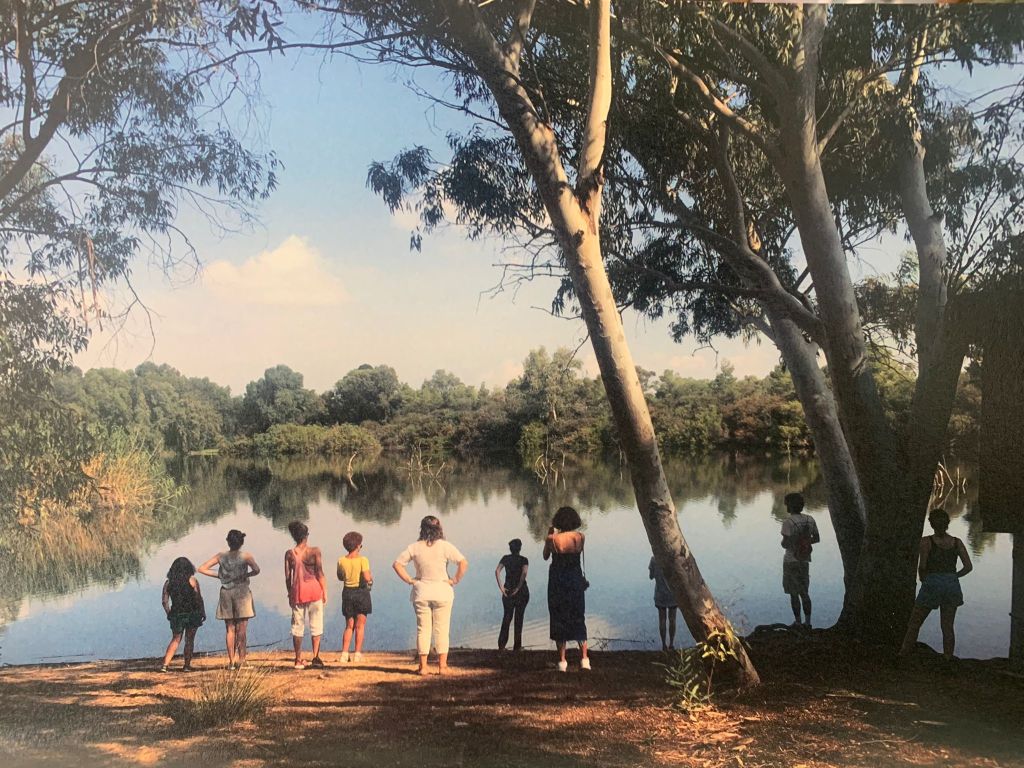
The above questions occupied my thoughts throughout the workshop of “Topophilia. Ecology, Art and the Cypriot Landscape”. Launching the workshop, I took a deep dive into those key elements and questions; the connection with the environment and it’s natural and human-made construction, as well as the issue of how we perceive and react to the surrounding landscape. I tried to investigate these personal interests by focusing on the participants, their reactions, their gaze on new things and their visual contact with a new “topos”.
Throughout the years I have been wandering around, noticing the small details of the island. I share a strong bond with the Cypriot landscape, both natural urban, and this bond shapes my way of thinking as well as my artistic practice.
Questions of existential nature arise each time; how visual perception is constructed and which process leads to understanding the surrounding world. I came to find many of those answers in studying ecological philosophy, a term first issued by the psychologist and philosopher James Gibson. Gibson stated that the environment is what we perceive at any given moment, directly, without any cognitive processing in between. That perception is not an achievement of a separate organ but of the body as a unity, the body as a whole.
In that way, the mental and the corporeal work together, constructing all the images of the world around us.
The impact of the Cypriot landscape on artists and their subsequent interaction with it was the theme of the 20th chapter of the ongoing Delivering Views programme by Phaneromenis 70. It was a workshop dedicated to the images of others, their perceptions, views and sentiments, while experiencing the Cypriot space. Apart from the role of the organizer, I also kept that of the observer. In that sense, Vanessa Oberin contributed in the project with her “visitor’s” insight which shaped Topophilia organically, same way all our projects are inspired and created. Through hers and all the participant’s views, I blended myself with their experiences and travelled again through their gaze, reinforcing and revitalizing the relationship with my birthplace even
more.
This secondary/indirect approach, an approach through the eyes of others, wasprobably the greatest benefit of the
workshop, the benefit to “love a place”, or “Topophilia”.
Kyriaki Costa, 2019
 Serap Kanay